Страница даты
12 мая 2026, Вторник
Праздники, посты и события
Поста нет.
Для этой даты другие календарные события пока не найдены.
Жития и богослужебные тексты
Saint Epiphanius, Bishop of Cyprus
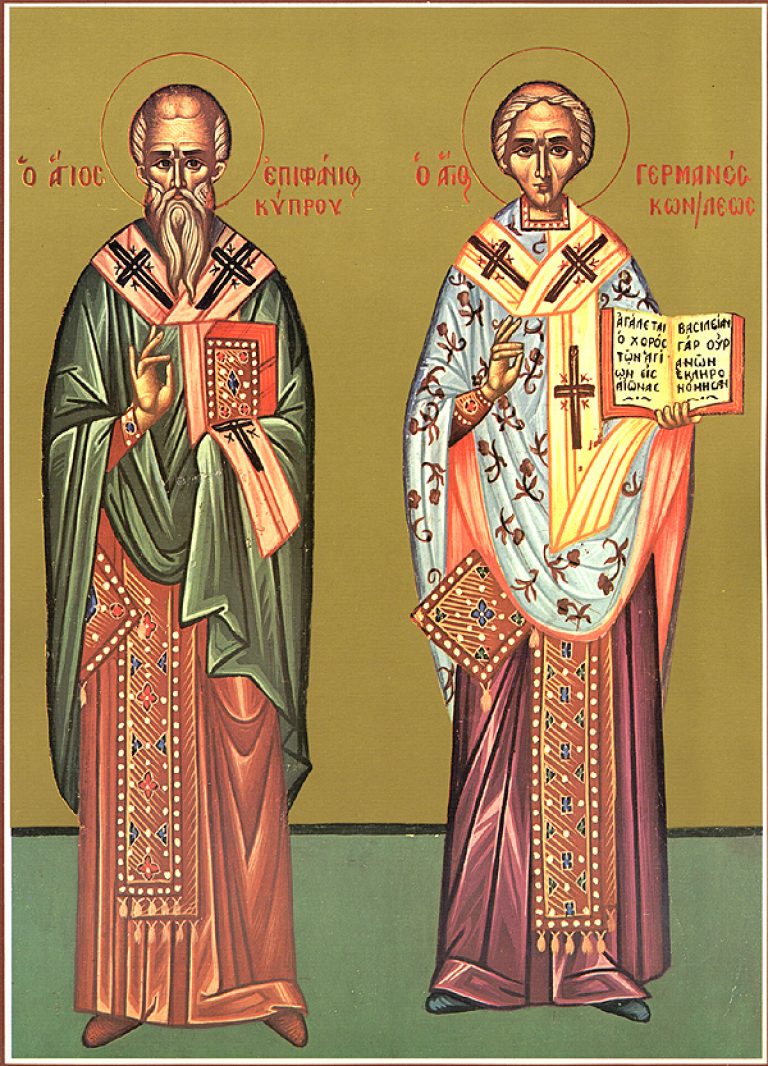
Saint Epiphanius, Bishop of Cyprus, “a last relic of ancient piety,” as Saint Jerome calls him, lived during the fourth century in Phoenicia. The Roman empress Honoria was his sister. He was of Jewish descent, and in his youth he received a fine education. He was converted to Christianity after seeing how a certain monk named Lucian gave away his clothing to a poor person. Struck by the monk’s compassion, Epiphanius asked to be instructed in Christianity. He was baptized and became a disciple of Saint Hilarion the Great (October 21). Entering the monastery, he progressed in the monastic life under the guidance of the experienced Elder Hilarion, and he occupied himself with copying Greek books. Because of his ascetic struggles and virtues, Saint Epiphanius was granted the gift of wonderworking. In order to avoid human glory, he left the monastery and went into the Spanidrion desert. Robbe...
Saint Germanus, Patriarch of Constantinople
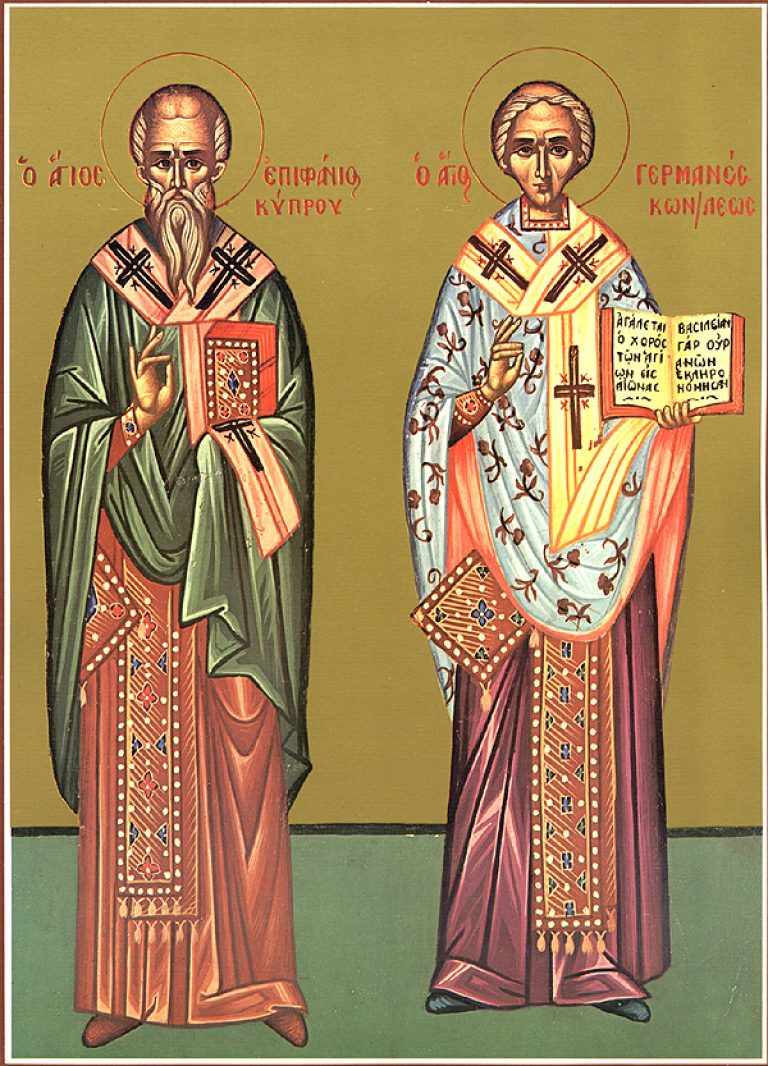
Saint Germanus, Patriarch of Constantinople, was born at Constantinople in the seventh century. His father, a prominent senator, was killed by order of the emperor Constantine Pogonatos (668-685). The young Germanus was emasculated and sent to a monastery, where he studied Holy Scripture. Because of the sanctity of his life, Germanus was made bishop in the city of Cyzicus. Saint Germanus rose up in defense of the Orthodox Faith against the iconoclast heretics. He was later made Patriarch of Constantinople. Saint Germanus continued to stand up against the iconoclasts and to their spokesman, the heretical emperor Leo III the Isaurian (717-741), but the contest was unequal. He was forced to put his omophorion upon the altar table in the sanctuary, and to resign the archpastoral throne. Then the enraged emperor, who accused the Patriarch of heresy the day before, sent soldiers, who beat the...
Hieromartyr Hermogenes, Patriarch of Moscow and All Russia

The Hieromartyr Hermogenes, Patriarch of Moscow and All Rus, was glorified on May 12, 1913. The memory of Patriarch Hermogenes as a holy martyr was passed on from generation to generation for three centuries, and people increasingly regarded him as an intercessor and supplicant for the Russian land before the Throne of the Almighty. During terrible years of national hardship, the nation turned to the memory of the heroic Patriarch. The Russian people came to his tomb with their personal tribulations, sicknesses and infirmities, reverently asking the help of Saint Hermogenes, and the All-Merciful Lord rewarded their faith.
Venerable Dionysius, Archimandrite of Saint Sergius’ Monastery
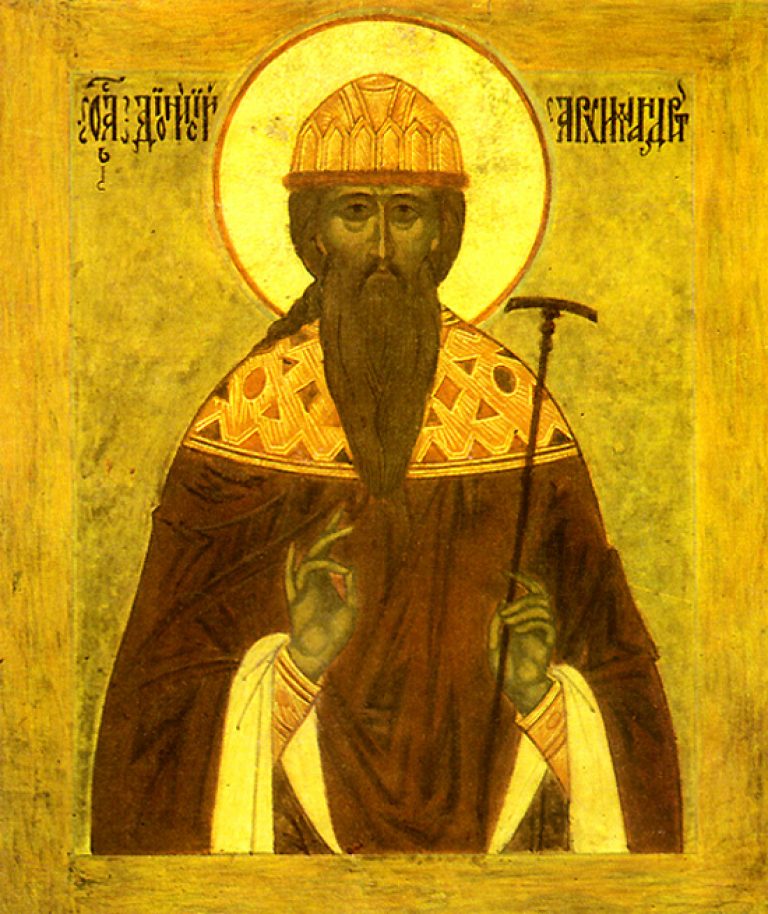
Saint Dionysius of Radonezh, in the world David Zobninovsky, was born about 1570 in the city of Rzhev. A novice, and then head of the Staritsky Dormition monastery, during the Time of Troubles he was the foremost helper of Saint Hermogenes, Patriarch of Moscow. From 1611, Saint Dionysius was archimandrite of the Trinity-Sergiev Lavra. Under his administration, a house and hospice for the injured and those left homeless during the Polish-Lithuanian incursion was opened near the monastery. During a famine, he told the brethren of the Lavra to eat oat bread and water, leaving the wheat and the rye bread for the sick. In 1611-1612, he and the steward of the Trinity-Sergiev monastery, the monk Abraham Palitsyn (+ 1625), wrote letters asking the people of Nizhni-Novgorod and other cities to send fighting men and money to liberate Moscow from the Poles. He also wrote to Prince Demetrius Pozhars...
Saint Sabinus, Archbishop of Cyprus
Saint Sabinus, Bishop of Cyprus, was born in the Phoenician city of Lycia. Hearing of the renowned ascetic, Saint Epiphanius of Cyprus, Sabinus went to him and received monastic tonsure. For five years he lived in asceticism with Saint Epiphanius in the wilderness. Afterwards, he wrote about the life and deeds of Saint Epiphanius. When Saint Epiphanius was elevated to the See of Cyprus, he ordained Saint Sabinus to the holy priesthood. After the death of his bishop and spiritual guide, Saint Sabinus became his successor. The wise archpastor zealously defended the Church from heretics. He died in the mid-fifth century.
Saint Polybius, Bishop in Cyprus
Saint Polybius was a disciple of Saint Epiphanius of Cyprus. He accompanied him on all his journeys and he wrote about the life and miracles of his teacher. Saint Polybius accompanied Saint Epiphanius when he was returning from Constantinople, unwilling to take part in the council condemning Saint John Chrysostom. As he was dying, Saint Epiphanius told Saint Polybius, “Go to Egypt, and after my death I shall concern myself about you.” Saint Polybius obeyed his teacher’s order with humility and, not waiting for the burial of the body, he went to Egypt, where he was made bishop of the city of Rinocyria. For his virtuous ascetic life, Saint Polybius was granted the gift of wonderworking. Once, through his prayer, the Lord sent rain during a drought and provided an abundant harvest in the fields. Saint Polybius reposed in the fifth century at an advanced age.
Martyr John of Vlachia, Romania
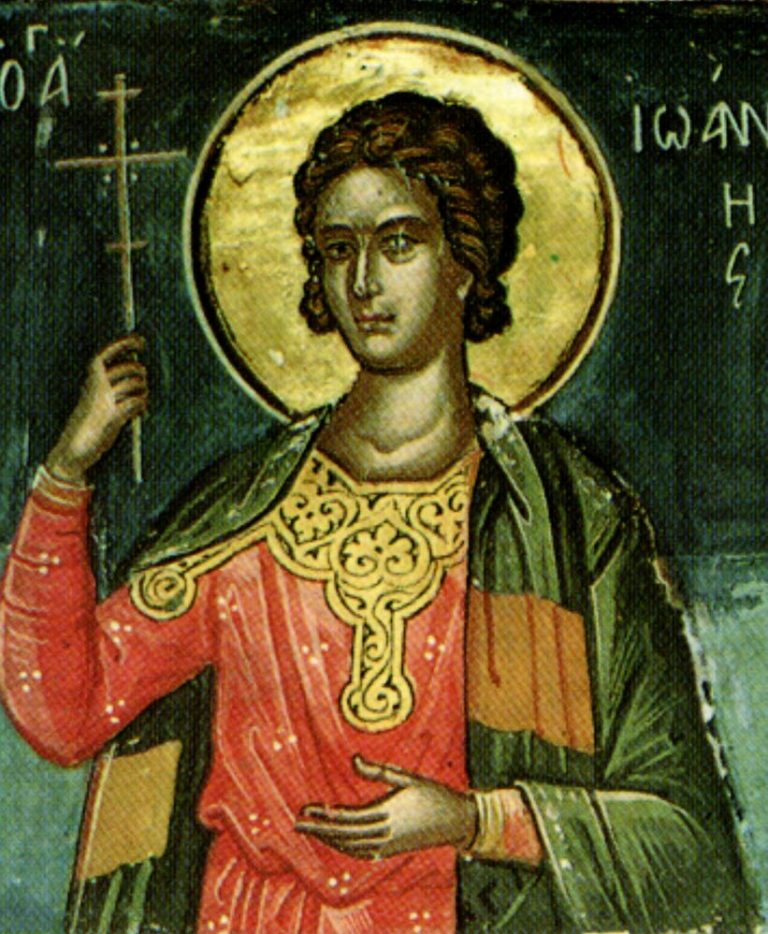
The Holy New Martyr John of Vlachia was born in 1644 in Oltenia. He received a good upbringing from his parents, who raised him in the fear of God, the love of country, and in their ancestral faith. At that time the Ţara Românească (the former name for Vlahia) was ruled by princes called Voevods, who were subject to the Sultan. The Voevod of Vlahia, Mihnea Voda, revolted against the Turks because he was unable to pay the exorbitant tribute which they demanded. He entered the Turkish territory, burning, killing, or jailing many Turks. Sultan Mehmet IV sent an army of Turks and Tatars against him, and he was forced to retreat. In retaliation, the Turks and Tatars ravaged Vlachia, killing many Christians, or throwing them into prison. Saint John, who came from a noble and wealthy family, was one of those who was jailed. After crossing the Danube River, a Turkish army captain noticed how han...
Martyr Pancratius
The Holy Martyr Pancratius was a native of Phrygia, but lived in Rome with his uncle Dionysius after his parents died. They heard Bishop Cornelius preach, and were later baptized. The fourteen-year-old youth suffered martyrdom at Rome during the persecution under Diocletian (284-305). He was buried on the Via Aurelia, and a church was built over his grave. The Aurelian gate is known today as the Porta Saint Pancrazio. Saint Gregory Dialogus (March 12) venerated Saint Pancratius, who was beheaded near the site of his monastery, and had a silver reliquary made for the martyr’s head. After Saint Gregory became bishop, the reliquary was placed in his cathedral on the Lateran hill. The reliquary was returned to the church of Saint Pancratius in the twentieth century.
Feasts & Saints
GOARCH Digital Chant Stand services: 2026-05-12
Calendar index day: 12-Tuesday
Saint Germanus the Patriarch of Constantinople
Official Saints category of the Greek Orthodox Patriarchate of Antioch and All the East.
Saint Epiphanius the Bishop of Cyprus
Official Saints category of the Greek Orthodox Patriarchate of Antioch and All the East.