Двунадесятые переходящие
✚ День Святой Троицы. Пятидесятница
31 мая 2026, Воскресенье
Текст праздника пока не найден в базе.
Праздники, посты и события даты
Поста нет.
✚ День Святой Троицы. Пятидесятница
Двунадесятые переходящие
Жития и богослужебные тексты
Holy Pentecost
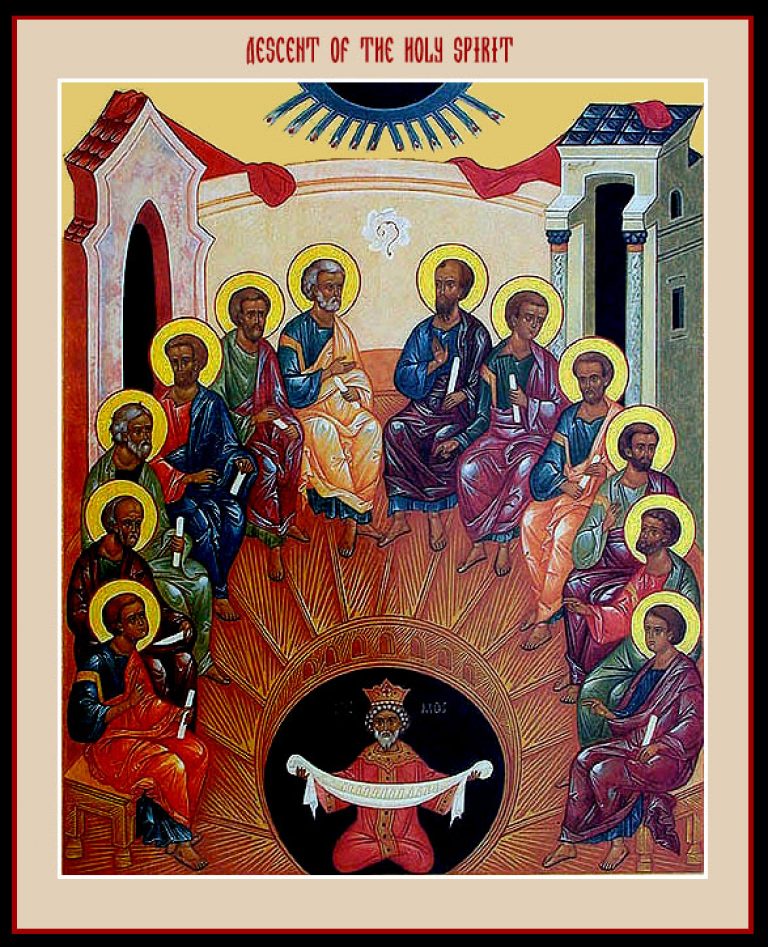
In the Church’s annual liturgical cycle, Pentecost is “the last and great day.” It is the celebration by the Church of the coming of the Holy Spirit as the end—the achievement and fulfillment—of the entire history of salvation. For the same reason, however, it is also the celebration of the beginning: it is the “birthday” of the Church as the presence among us of the Holy Spirit, of the new life in Christ, of grace, knowledge, adoption to God and holiness. This double meaning and double joy is revealed to us, first of all, in the very name of the feast. Pentecost in Greek means fifty, and in the sacred biblical symbolism of numbers, the number fifty symbolizes both the fulness of time and that which is beyond time: the Kingdom of God itself. It symbolizes the fulness of time by its first component: 49, which is the fulness of seven (7 x 7): the number of time. And, it symbolizes that whi...
Apostle Hermas of the Seventy

The Holy Apostle Hermas was a bishop in Philippopolis, Thrace. He was a Greek, but he spent some time in Rome. The holy Apostle Paul greets him in the Epistle to the Romans (Rom 16:14). The Apostle Hermas endured much grief from the pagans for preaching the Gospel, but he died in peace. According to Tradition, Saint Hermas is the author of The Shepherd, an instructive book based on revelations from angels.
Martyr Hermias at Comana
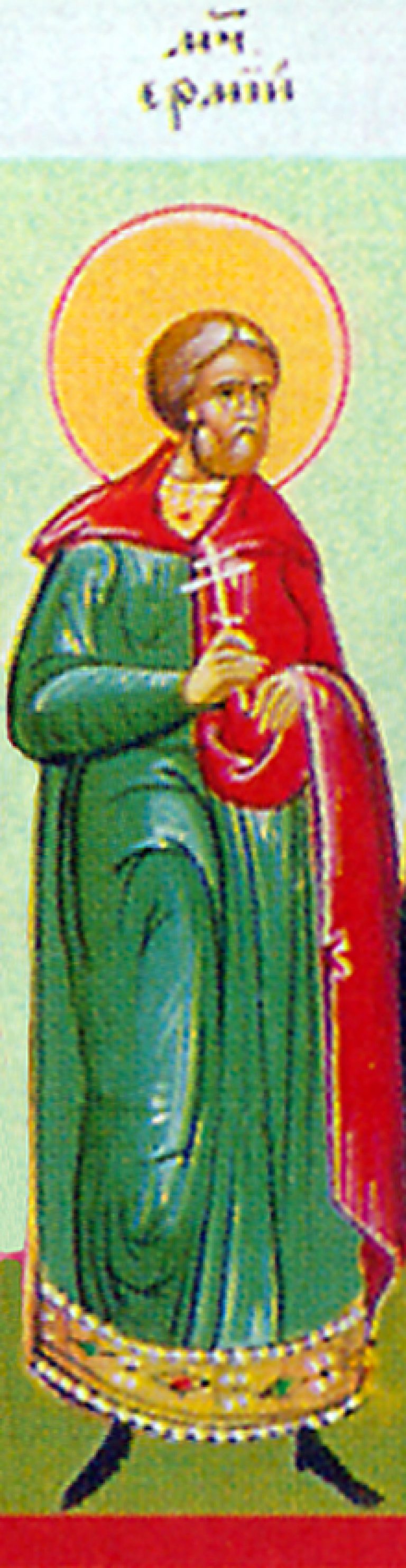
Holy Martyr Hermias suffered for Christ in the city of Comana during the persecution under the emperor Antoninus Pius (138-161). The governor Sebastian, who was in Cappadocia to arrest Christians, urged the saint to offer sacrifice to the pagan gods, promising him honors and mercy from the emperor. The old soldier bravely confessed his faith in Christ. After long exhortation, the governor gave orders to torture the saint. They beat him on the face so that the skin peeled from his face, and they threw him into a red-hot oven. When the oven was opened after three days, the martyr Hermias emerged from it unharmed. The governor Sebastian ordered the sorcerer Marus to poison Saint Hermias with a potion. The poisonous drink did the saint no harm. A second goblet with even stronger poison also failed to kill the saint. The sorcerer believed in Christ the Savior, and was immediately beheaded. Sa...
Martyr Philosophus at Alexandria

Holy Martyr Philosophus suffered for Christ in Alexandria during the persecution by the emperor Decius (249-251). They urged the youth to deny Christ, but he remained steadfast. After suffering various tortures, he was placed on a soft bed, bound hand and foot, and a harlot was put in the room with him to tempt him to sin. In order not to yield to sin, the saint bit off his tongue and spit it in the harlot’s face. She was so horrified that she fled from him. The executioners, seeing the martyr’s bravery and fearlessness, beheaded the saint with a sword.
Hieromartyr Philosophos of St. Petersburg
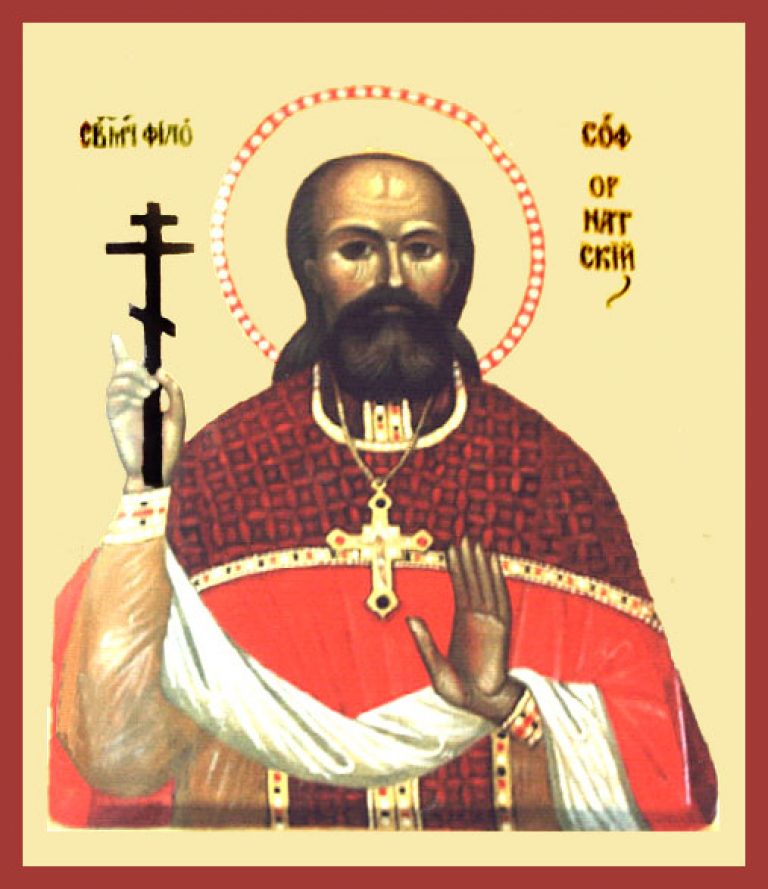
The Hieromartyr Archpriest Philosophos (Philósophos) N. Ornatsky was born on May 21, 1860 in the churchyard of Novaya Yerga, Cherepovets County, Novgorod Governorate,1 into the family of a village priest. One of his brothers was married to the niece of Saint John of Kronstadt. Philosophos studied first in Kirillov Theological School, and then in the Novgorod Theological Seminary. In 1885 he graduated from the St. Petersburg Theological Academy with the degree of Candidate. In the summer of 1885, Philosophos married Elena Zaozerskaya, the daughter of the former subdeacon of Metropolitan Isidore, and soon he was ordained to the priesthood. Initially, the young priest served as rector in the church of the orphanage of the Prince of Oldenburg, where he had once taught the Law of God (catechism). From 1892 to 1912, he served as the rector of the church at the Expedition for the Procurement of...
Metropolitan Philotheos of Tobolsk, Enlightener of Siberia
The Most Reverend hierarch, the renowned Metropolitan of Siberia and Tobolsk, was from a noble, but poor family and received a theological degree at the then famous Kiev Theological Academy. At the end of the course, he was ordained as a priest for one of the rural churches, but he was soon widowed. He was tonsured as a monk with the name Philotheos, and joined the brotherhood of the Kiev Caves Lavra. In Siberia Christianity began to spread among the native pagans and Mohammedans from the very conquest of this country by the Russian state (in 1581), but conversions of the Siberian non-Russians to faith in Christ were generally insignificant and mostly individual.
Saint Apollonios (Apollo) of the Egyptian Thebaid
The Venerable Apollonios was the son of the pious parents, Aisi and Amani. According to one version, he had an elder brother, a monk, who died before his birth, who appeared to him in a dream. According to other sources, his parents were childless before the birth of Apollonios. At the age of fifteen, the Saint retired to the inner desert of the Thebaïd (in Lower Egypt), along with his kinsman Abib. After fourteen years of the solitary life, Saint Apollonios was granted a Divine Revelation. A Voice said: “Apollonios, by your hands I will destroy the wisdom of the wise men of Egypt, and I will remove their knowledge, which is not true knowledge. You will also overthrow those who are reputed to be the wise men of Babel (the Babylon of Egypt), and all their service to devils (idolatry). Now go quickly to the desert, to the region which is near the habitations of men. There you shall beget f...
Feasts & Saints
GOARCH Digital Chant Stand services: 2026-05-31
Calendar index day: 31-Sunday